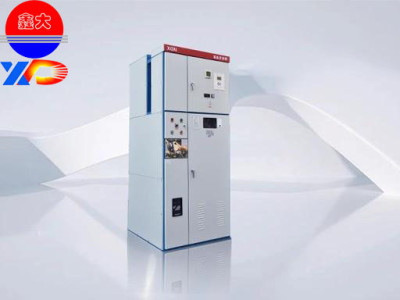
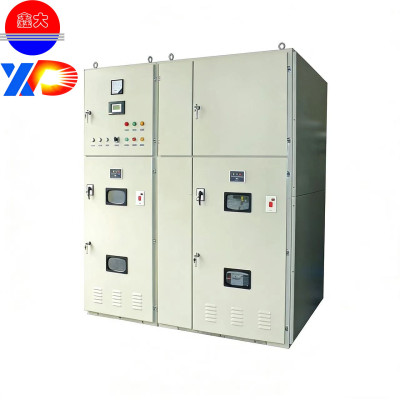
low-voltage distribution device
Advantages of GCK Products
• Draw-out structure allows maintenance without power outage, convenient for operations.
• Compartment isolation, high safety, prevents fault spread.
• Good dynamic and thermal stability, high short-circuit withstand capability.
• Modular design, good interchangeability, flexible capacity expansion.
• Compact design, small footprint, high space utilization.
• High versatility, compatible with various components, cost-effective.
Detailed Information about GCK Product
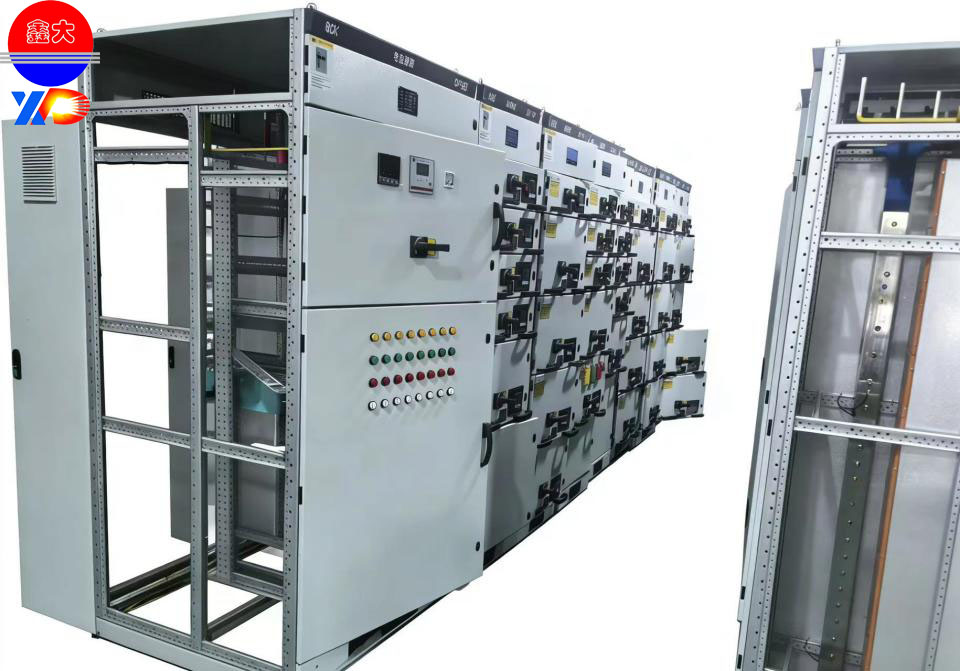
1. Product Introduction: Distribution CabinetGCK is a widely used low-voltagedraw-out switchgear in Chinaprimarily designed for AC power supply systems with a frequency of 50 Hz and a rated voltage of up to 660 V. As a key component in power supply systems for industrial and residential buildings, it is mainly used for power distribution, motor control, and line protection. The design features a modular, unit-based structure, with cabinets organized as independent functional units. It offers excellent thermal stability, high protection ratings, and ease of installation and maintenance. GCK is the preferred solution for ensuring stable power supply, whether in power stations within large industrial parks or distribution substations in high-rise buildings.
2. Technical parameters (customizable)
1. Electrical Characteristics ◦ Rated operating voltage: AC 380V/660V ◦ Rated operating current: up to 4000A ◦ Rated short-time withstand current: 50kA/1s ◦ Rated peak withstand current: 105kA 2. Overall Dimensions ◦ Frame: 8MF cold-rolled steel, modular assembly ◦ Standard height: 2200mm ◦ Standard width: 600mm, 800mm, 1000mm ◦ Depth: 800–1000mm (customizable on request) 3. Protection and Environmental Conditions ◦ Protection degree: Enclosure IP30, rear panel can be upgraded to IP40 ◦ Permissible ambient temperature: -10℃ to +40℃ ◦ Relative humidity: ≤ 95% (non-condensing) III. Main Features 1. Universal modular design The cabinet features a standardized steel frame with 20mm modular holes, allowing flexible combination of functional units. Drawer units are available in various sizes from 0.5 to 2.5 units, ensuring easy installation and quick adaptation to different circuit requirements and expansion plans. 2. Arc-proof compartment to prevent arc propagation The system adopts an independent three-compartment isolation structure, including functional compartments, busbar compartments, and cable compartments. This design effectively prevents the influence of individual circuit faults on the entire system, significantly improving operational safety and simplifying zonal troubleshooting and maintenance. 3. Thermal stability and reliable operation The cabinet has high structural strength, with securely connected main busbars and branches. It demonstrates excellent thermal stability and dynamic characteristics, capable of effectively withstanding short-circuit current surges. This makes it ideal for long-term operation in industrial environments requiring high load capacity and stability. 4. Maintenance without power outage, efficient and simple A key advantage lies in its draw-out design. A faulty unit can be isolated for maintenance or replacement without significant interruption to the power supply, substantially reducing downtime losses. This makes it particularly suitable for applications requiring high power supply continuity. 5. Excellent heat dissipation and longer service life The enclosure is equipped with dedicated ventilation openings at the top and bottom, forming an efficient natural air channel that reduces internal operating temperature and extends the lifespan of electrical components. IV. Application Scenarios • Industrial sector: Power supply and control centers for automated production lines in various factory workshops, including the metallurgical, petrochemical, and light industries. • Public buildings: Power distribution systems for critical infrastructure, including high-rise office buildings, shopping complexes, hospitals, airports, and high-speed railway stations. • Power system: Low-voltage power distribution and management for power plants, substations, and distribution stations. • Data center: Large-scale data centers with strict requirements for power supply reliability, functioning as the main power distribution unit.