dry-type air-core reactor
No iron core, no saturation, stable inductance.
Dry heat insulation, no oil leakage, fire and explosion proof.
Low noise, low loss, energy-saving and durable.
High short-circuit resistance, reliable operation.
Maintenance-free, easy to install, wide range of applications.
Dry air-core reactor
I. Product Overview
Dry-type hollow series reactors are key specialized equipment for reactive power compensation and power quality management in power systems. They are mainly used in 10kV and 35kV shunt capacitor bank circuits, forming a 'capacitive reactance' compensation branch in series with capacitors. Their primary function is to limit the inrush current of capacitor banks, suppress harmonic amplification in the grid, reduce overvoltage on switches, and protect capacitors and switching equipment.
This product overcomes the technical limitations of traditional iron-core reactors. It features a fully dry-type structure, with no iron core and hollow windings, manufactured using vacuum casting with epoxy resin, with air serving as the insulating and cooling medium. This completely eliminates the risks of oil leakage and explosion inherent in oil-immersed equipment, and avoids issues such as magnetic saturation, leakage flux heating, and excessive noise found in iron-core reactors.
II. Main Structure and Working Principle
(I) Main Structural Composition
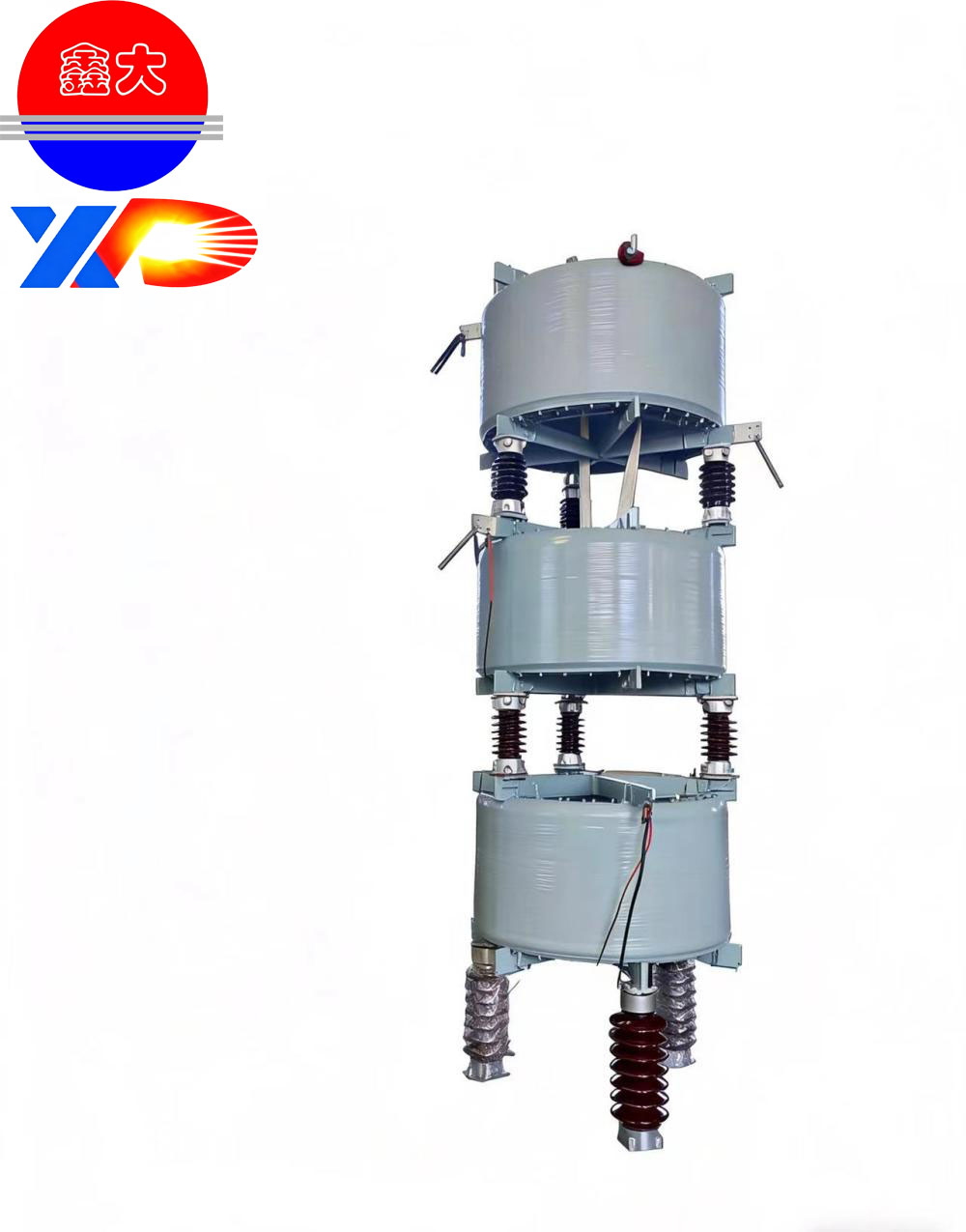
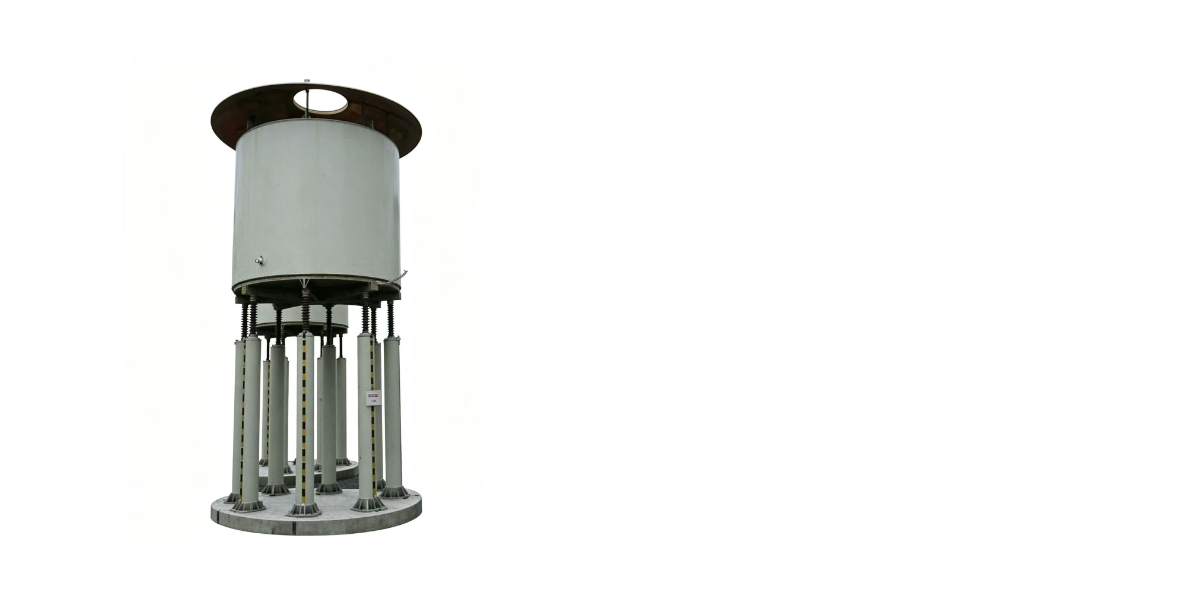
This product adopts a modular integrated structure, and its main components consist of six major parts: a winding manufactured by vacuum casting, an upper and lower star-shaped frame, a high-strength support insulator, a terminal assembly, a grounding system, and external protection components (optional). The design is scientifically sound, with both mechanical strength and electrical performance optimized.
Vacuum-cast winding: the main functional component, wound from multiple strands of oxygen-free copper wire, has a conductor surface coated with high-temperature insulating paint, and through vacuum casting with epoxy resin, forms a monolithic insulating cylinder. The winding has a multi-layer segmented structure with heat dissipation channels between layers, which not only ensures insulation properties but also achieves efficient natural heat dissipation.
Star Frame: Welded from high-strength aluminum alloy profiles, the surface is treated with anodic oxidation and anti-corrosion protection, ensuring light weight, high strength, and corrosion resistance. The frame is used to fix the ends of the winding and dissipate the short-circuit electrodynamic force, ensuring that the winding does not deform or shift under short-circuit impact.
Support Insulator: Made of high-strength rod-shaped epoxy fiberglass insulators with an insulation class ≥H and a mechanical bending strength ≥12 kN. It is used to support the winding and frame, provide high and low voltage insulation, and bear the weight of the winding and the short-circuit electrodynamic force.
Terminal block: made of tinned red copper with contact resistance ≤50 μΩ, equipped with high-strength insulating shields. The connection method is flexible (bolt crimping/clamping connection), suitable for high-voltage cables and busbars of various cross-sections.
Grounding system: Including grounding bolts, grounding copper busbars, and star-type grounding terminals, it ensures reliable grounding of all equipment, eliminates induced voltage, and guarantees the safety of operation and maintenance personnel.
Outdoor protection components (optional): Outdoor products are equipped with UV and rain protective covers, water accumulation prevention bases, and the enclosure is made of 304 stainless steel with an IP54 protection rating, allowing use in harsh outdoor environments.
(II) Working principle
In the circuit of high-voltage shunt capacitor banks, a dry-type air-core series reactor is connected in series with the capacitor, and three main functions are realized by utilizing the inductive reactance characteristics of the reactor:
Current limiting effect: At the moment of closing the capacitor bank, an inrush current several or dozens of times the rated current is generated. The reactor limits the peak value of the inrush current through its own inductive reactance (usually the inrush current can be limited to within 5 times the rated current), preventing damage to equipment such as circuit breakers and capacitors caused by the inrush current.
Filtering effect: By selecting an appropriate reactance value (e.g., 4.5%, 6%, 12%), the capacitor-reactor branch provides low impedance for specific harmonics (3rd, 5th, 7th), introduces harmonic current into the branch to suppress harmonics, and prevents overheating and damage to capacitors caused by harmonic amplification in the grid.
Voltage regulation effect: When switching the capacitor bank, switching overvoltage is generated. The inductive reactance of the reactor can smooth the rate of rise of the overvoltage, reduce its amplitude, and protect the insulation of electrical equipment in the circuit.
III. Technical specifications and parameters (full coverage and customizable)
Main characteristics of parameter categories Detailed description
Rated voltage: 10 kV, 20 kV, 35 kV (can be changed to 66 kV). Suitable for the main voltage levels of China's high-voltage power systems; custom-made models meet the needs of specific power systems.
The rated current range is from 50 A to 1000 A (covering the full range), precisely matched according to the compensation power of the capacitor bank, allowing for customization and standardized series production.
Insulation class: F (155℃), H (180℃). Class H insulation standard is applicable for high-temperature environments; class F insulation meets standard application scenarios and offers better cost performance.
Structure: Dry-type hollow radiator, fully cast in vacuum with epoxy resin; coreless, oil-free, with air insulation for cooling; outdoor type, with a special protective structure.
Cooling method: natural air cooling (NAC), forced air cooling (FAC, optional). In most cases, natural air cooling is used; forced air cooling is applied under special conditions such as high load and high altitude.
Energy dissipation class: standard type, low energy dissipation type (customizable). The energy dissipation of the low dissipation type is 15–25% lower than that of the standard type, resulting in greater energy savings during long-term operation.
Noise level is ≤ 45 dB (under rated conditions, at a distance of 1 meter), excluding magnetostrictive noise. It is significantly lower than that of an iron-core reactor (≤ 65 dB) and is suitable for quiet environments.
Short-circuit withstand capability: Withstands the impact of a short-circuit current 20 times the rated current for 2 seconds.
Protection level: indoor IP30, outdoor IP54 (IP65 customizable). IP30 prevents entry of foreign objects; IP54 protects against rain and dust; IP65 is suitable for extreme conditions such as coastal salt spray and heavy rain.
Operating ambient temperature: -40℃ to +85℃; Humidity: ≤95% (non-condensing); Altitude: ≤4000 meters (parameters can be adjusted for higher altitudes). Adaptable to various harsh conditions such as severe cold, high temperature, high humidity, high altitude, and salt spray.
Service life ≥ 30 years; epoxy resin insulation layer has anti-aging and anti-ultraviolet properties; oxygen-free copper windings are corrosion-resistant.
Implementation standards: GB/T 1094.6, GB/T 17004, IEC 60076-6, DL/T 840. Fully compliant with national, industry, and international standards, with controlled and traceable quality.
IV. Main Product Advantages
(1) Outstanding electrical characteristics, precise and stable operation
- No magnetic saturation, high inductance linearity: the iron-free core design eliminates the phenomenon of magnetic saturation; the inductance value remains stable within the rated current range up to the short-circuit current (linearity error ≤ ±3%), ensuring the optimal operating state of the compensation system.
Low losses, high energy efficiency: windings made of multi-strand oxygen-free copper conductors reduce skin effect losses; vacuum-cast epoxy resin provides a dense insulation layer with extremely low losses, below the national standard.
(2) Excellent mechanical strength, high impact resistance
- Integral cast windings, short-circuit and electromagnetic shock protection: windings formed by vacuum-cast epoxy resin have a robust structure and can withstand a short circuit 20 times the rated current for 2 seconds without deformation or insulation damage.
- Seismic and wind resistance: lightweight design, low center of gravity, equipped with a special seismic base; withstands earthquakes of magnitude 8 and typhoons of force 12, suitable for complex terrains.
(3) Environmental protection, safety and reliability, no operational risks
- Dry construction, fire-resistant, explosion-proof, environmentally friendly: air is used as the insulation and cooling medium, with no oil or toxic gases, eliminating the risk of leaks and explosions; suitable for locations sensitive to ignition sources.
- Low noise level: the main magnetostrictive element does not produce low-frequency noise; the noise level is ≤ 45 decibels under rated conditions, making it suitable for noise-sensitive locations.
- Excellent thermal insulation properties, resistance to aging and corrosion: the insulation material, made from epoxy resin obtained through vacuum casting, undergoes high-temperature curing; thermal insulation properties are stable within a temperature range of -40℃ to +85℃, allowing adaptation to harsh climatic conditions.
(4) Simple and efficient operation and maintenance, low life cycle cost.
Maintenance-free design: no need for oil tanks, tap changers, or vulnerable components; only an annual visual inspection and grounding check are required, reducing maintenance costs and labor.
V. Application scenarios
Current limiting function in parallel high-voltage capacitor banks: primary application; used for reactive power compensation at 10 kV/35 kV substations, to limit short-circuit current, suppress harmonics, and protect equipment.
Power quality management at renewable energy power plants: applied in wind power, photovoltaic power, and integrated photovoltaic energy storage power plants to suppress harmonics and stabilize voltage, ensuring seamless grid connection.
- Harmonic management and reactive power compensation for industrial enterprises: specifically designed for nonlinear loads (such as frequency converters, electric arc furnaces, etc.) to compensate reactive power and suppress harmonics.
- Modernization of urban distribution networks: applied to new or upgraded reactive power compensation substations to address short-circuit current and harmonic issues, thereby improving power supply quality.
- Special power supply systems for operation in high-altitude, coastal, low-temperature, and chemically aggressive environments, ensuring long-term stable operation.