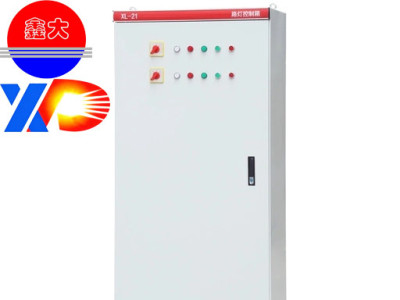
Parallel compensation device
1. Compensate for reactive power: improve power factor and reduce energy costs.
2. Energy saving and loss reduction: reducing line losses and increasing efficiency use of transformers.
3. Voltage stabilization: improving voltage quality and ensuring stable operation of equipment.
4. Safety and reliability: full protection, flexible switching and long service life.
XINDA TBBZ Complete Set of Shunt Capacitors
1. Product Overview
TBBZ Complete Set of Shunt Capacitors is a reactive power compensation equipment designed by Xinda Transformer Co., Ltd. for power systems and industrial and mining enterprises. It is suitable for substations with voltage levels of 6kV~35kV, which can automatically switch capacitor banks, achieve dynamic balance of voltage and reactive power, precisely control the power factor, effectively solve problems of overcompensation and insufficient reactive power, reduce line losses, and improve power quality.
Main Components
The device consists of a controller, a microcomputer protection unit for the capacitor bank, a high-voltage shunt capacitor, a series reactor, a discharge coil, zinc oxide arrester, a disconnector, an earthing switch, a connecting busbar, a cabinet, and accessories, which can be flexibly configured according to on-site requirements.


2. Main Technical Parameters
Parameter
Technical Specification Range |
|
Rated voltage |
6 kV / 10 kV / 35 kV |
Rated Capacity |
1000 kvar ~ 200000 kvar (customizable) |
Rated frequency |
50 Hz |
Phase |
Single-phase / Three-phase |
Harmonic Order |
Can be configured according to on-site harmonic conditions |
Installation |
Indoor / Outdoor |
Grouping requirement |
Supports automatic control of up to 12 capacitor banks on two bus sections |
Communication |
Supports standard industrial communication protocols compatible with four remote functions |
3. Product Main Features
Intelligent automatic control
Equipped with automatic control function, it can detect system voltage and reactive power in real time, automatically switch capacitor banks, and realize closed-loop power factor control without manual intervention.
Four Remote Remote Control
Supports remote signaling, remote metering, remote regulation and control, can be connected to an integrated automation system substations for remote centralized monitoring and operation.
Full-length safety protection
Equipped with a microcomputer protection unit for the capacitor bank, which accurately protects against overvoltage, overvoltage, internal faults and other risks, completely eliminating malignant accidents such as fire and explosions.
Flexible scenario adaptation
Modular design, supports indoor/outdoor installation, fixed compensation/automatic group compensation, adaptable to complex distribution systems with multiple capacitor banks on two bus sections.
Harmonic suppression capability
Can match series reactors with different reactance rates based on the user's on-site harmonic conditions, effectively suppressing the impact of harmonics on capacitor banks and ensuring equipment safety.
High-reliability design
Equipped with a special switch, supports frequent operation and prevents switching bounce; Series reactors can flexibly use dry iron core, iron core, dry-type air core, and other designs to adapt to various installation conditions.
Custom delivery
Can be flexibly assembled according to customer needs and transportation requirements, supporting non-standard capacity, special protection levels, and other customized solutions.
4. Application scenarios
35 kV, 110 kV, 220 kV substations in the power system
Industrial distribution systems such as industrial and mining enterprises, metallurgy, and mining industries
Reactive power compensation on the grid-connected side of new power plants (photovoltaic, wind)
Scenarios with high power supply quality requirements, such as railway transportation, data centers, and hospitals
5. Order information (parameters must be provided)
Rated system voltage
Rated Capacity
Grouping requirements
Number of phases
Frequency
Harmonic Order
Installation location (indoor or outdoor)
Height
Reactor coil material
Communication mode and communication protocol